
Roof Replacement After Ice Dam Damage
Ice dams can force meltwater beneath shingles at eaves, valleys, walls, and low roof areas. Replacement may be appropriate when repeated dams have damaged shingles, underlayment, decking, insulation, or interior finishes, but the project should also address heat loss, air sealing, insulation, and ventilation contributors.
Thank you for reading this post, don't forget to subscribe!Homeowners researching roof replacement after ice dam damage usually need more than a yes-or-no answer. They need to understand the condition, the connected roof components, the choices that change cost or risk, and the records that should be created before work begins.
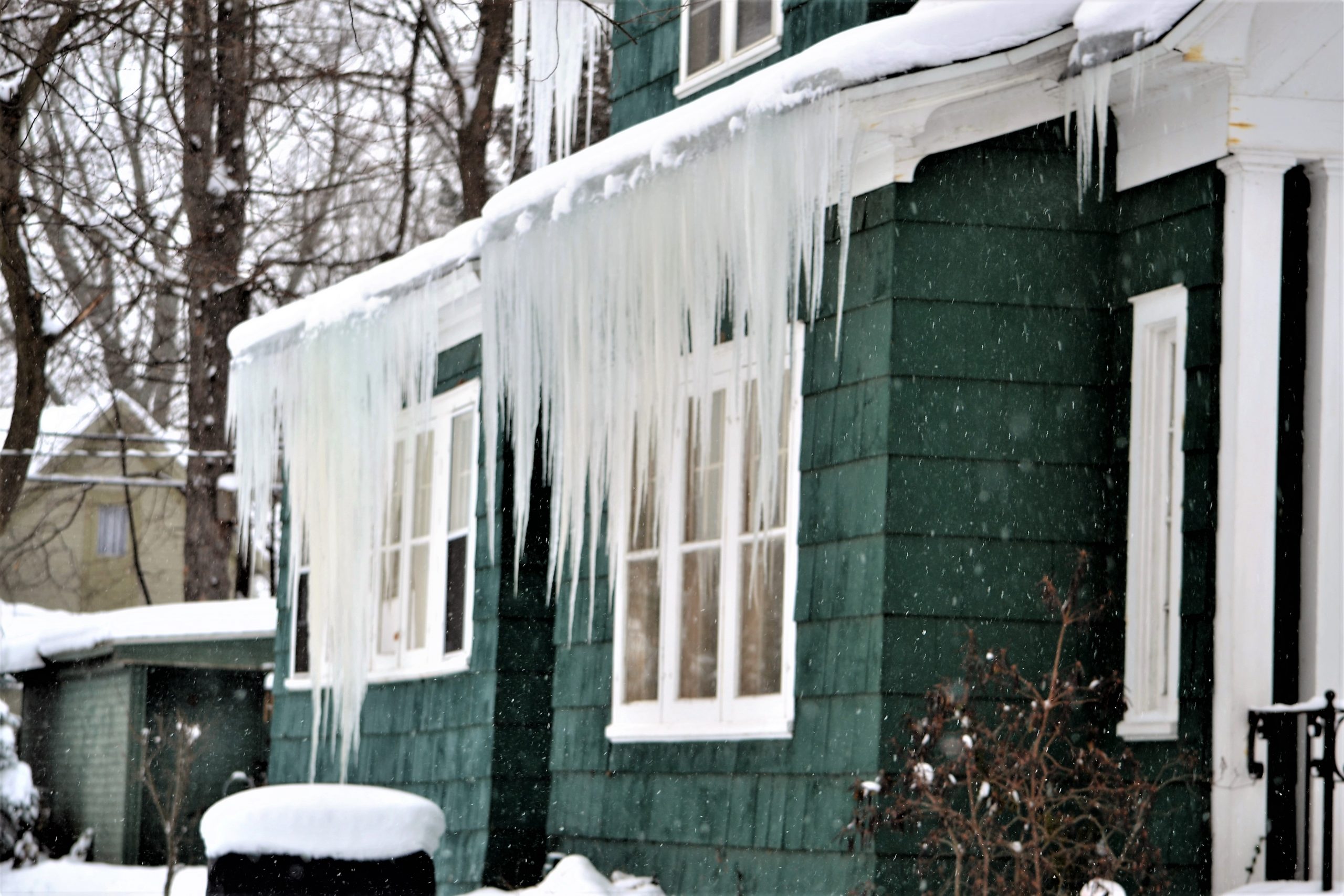
An ice dam forms when upper roof snow melts and refreezes at a colder edge. Removing damaged shingles without correcting the temperature and drainage pattern may allow the problem to return. The roof scope and attic scope should be coordinated rather than treated as the same repair.

Quick answer
Ice dams can force meltwater beneath shingles at eaves, valleys, walls, and low roof areas. Replacement may be appropriate when repeated dams have damaged shingles, underlayment, decking, insulation, or interior finishes, but the project should also address heat loss, air sealing, insulation, and ventilation contributors.
What homeowners should understand
Safety and temporary protection come first when active damage threatens the home. Permanent replacement should begin after the cause, extent, and responsible scopes are documented.
Damage can be sudden, gradual, or a combination of both. That distinction affects repair strategy and may also affect insurance handling, but the physical roof still requires an objective inspection.
Key factors that change the recommendation
- Shingle and membrane damage at eaves and valleys
- Rotten decking or fascia from repeated wetting
- Attic heat leakage and insulation gaps
- Blocked soffit intake and inadequate ventilation paths
- Gutter and roof-edge geometry
These factors should appear in the inspection notes, estimate, contract, or project photographs when they affect the scope. A clear record makes it easier to compare options and prevents important details from disappearing after tear-off begins.
Decision table: Roof Replacement After Ice Dam Damage
| Condition to evaluate | Risk if ignored | Practical next step |
|---|---|---|
| Shingle and membrane damage at eaves and valleys | Chipping ice with tools that damage shingles | Document interior and exterior damage safely |
| Rotten decking or fascia from repeated wetting | Installing heat cables as the only long-term solution | Remove snow or ice only with appropriate methods |
| Attic heat leakage and insulation gaps | Replacing the roof without evaluating attic heat loss | Inspect attic heat, moisture, and air leakage |
| Blocked soffit intake and inadequate ventilation paths | Blocking soffit intake with added insulation | Replace damaged deck and roofing with enhanced eave protection |
| Gutter and roof-edge geometry | Chipping ice with tools that damage shingles | Coordinate insulation, air sealing, and ventilation corrections |
How Terra Nova evaluates the damage
- Step 1: Document interior and exterior damage safely
- Step 2: Remove snow or ice only with appropriate methods
- Step 3: Inspect attic heat, moisture, and air leakage
- Step 4: Replace damaged deck and roofing with enhanced eave protection
- Step 5: Coordinate insulation, air sealing, and ventilation corrections
No roof detail can guarantee that ice never forms during extreme weather. A durable strategy reduces water entry risk and controls the conditions that promote repeated dams.
What Terra Nova checks
- Shingle and membrane damage at eaves and valleys
- Rotten decking or fascia from repeated wetting
- Attic heat leakage and insulation gaps
- Decking, underlayment, flashing, ventilation, and drainage connections
- Access, weather protection, cleanup, and documentation requirements
Records homeowners should keep
- Inspection photographs and measurements
- Itemized estimate and signed contract
- Material selections and product documents
- Approved change orders and hidden-condition photographs
- Final invoice, warranties, permits, and completion records
Cost, contract, and scope considerations
Emergency protection, diagnostic work, structural repair, permanent roofing, and interior restoration may be separate scopes. Accurate separation makes budgeting and insurance documentation clearer.
For broader pricing context, review How Much Does a New Roof Cost in New Jersey?, then use a site-specific inspection to determine the actual roof area, pitch, layers, access, material system, flashing, ventilation, decking allowances, and disposal requirements for your property.
Common mistakes homeowners should avoid
- Chipping ice with tools that damage shingles
- Installing heat cables as the only long-term solution
- Replacing the roof without evaluating attic heat loss
- Blocking soffit intake with added insulation
North Jersey roofing considerations
Homes across Bergen, Passaic, Essex, Hudson, Morris, and Union counties vary from tightly spaced urban properties to steep suburban roofs and historic construction. Access, parking, neighbor protection, municipal requirements, and drainage can materially affect the work plan.
Terra Nova Construction & Roofing serves Garfield, Clifton, Lodi, Passaic, Hackensack, Elmwood Park, Wallington, Paramus, Wayne, Montclair, and surrounding North Jersey communities. A site inspection is used to convert general guidance into a property-specific recommendation.
Related Terra Nova roofing services and original resources
- Roof Replacement New Jersey
- Roofing Contractor New Jersey
- Ice and Water Shield Guide
- Best Roof Ventilation for Your Home
- Roof Leak Repair New Jersey
- Gutter Installation and Repair
Related roof replacement resources
Related roof leak resources
Frequently asked questions
Does ice dam damage require a new roof?
Not always. Localized repairs may work if the roof is otherwise sound, while widespread aging or repeated damage may favor replacement.
Will ice and water shield stop all ice-dam leaks?
It improves protection when installed correctly, but edge details, fasteners, roof shape, and attic heat still matter.
Should gutters be removed during replacement?
Gutter position and fascia condition should be evaluated. Removal may help rebuild damaged eaves.
Can heat cables prevent ice dams?
They can create drainage channels in some situations but do not correct insulation and air-leakage causes.
Should wet insulation be replaced?
Evaluate it after stopping water entry. Wet or damaged insulation may need drying or replacement.
How can I remove ice safely?
Avoid climbing on icy roofs or hacking at shingles. Use qualified help and safe ground-based methods where appropriate.
Last reviewed by Terra Nova Construction & Roofing: July 15, 2026. This page provides general educational information; property conditions, contracts, financing, insurance coverage, warranty terms, and municipal requirements vary.
Get a roof replacement evaluation
Send your address, the roof concern, known age, and photographs if available. Terra Nova can inspect the relevant roof sections, explain the options, and prepare a written scope for your North Jersey property.