
Flat Roof Bubbling: Causes and Repair Options
A reliable plan for flat roof bubbling repair should identify the membrane type, seam condition, penetrations, drainage, wet insulation, deck condition, and whether the defect is isolated or part of wider system failure.
Thank you for reading this post, don't forget to subscribe!When evaluating flat roof bubbling repair, the lowest price is not automatically the lowest long-term cost. A repair that restores the actual water path, fastening, drainage, and supporting materials is more valuable than a surface treatment that hides the evidence.
A reliable plan for flat roof bubbling repair should identify the membrane type, seam condition, penetrations, drainage, wet insulation, deck condition, and whether the defect is isolated or part of wider system failure. Terra Nova Construction & Roofing uses photographs, measurements, condition notes, and a written scope to explain the recommendation for North Jersey properties.

Quick answer
A reliable plan for flat roof bubbling repair should identify the membrane type, seam condition, penetrations, drainage, wet insulation, deck condition, and whether the defect is isolated or part of wider system failure.
The safest next step is a documented inspection and itemized scope—not roof climbing or a blind surface patch.
What homeowners should know about this condition
The phrase flat roof bubbling repair can describe several different conditions. Two homes with a similar visible symptom may require different work because the roof type, age, pitch, drainage pattern, surrounding materials, and history of previous repairs are different.
This page supports the broader Roof Repair New Jersey resource and is designed to help homeowners ask better questions before approving work.
Symptoms that justify an inspection
- Interior staining beneath low-slope sections
- Open or wrinkled membrane seams
- Ponding water that remains after normal drying time
- Blisters, bubbles, cracks, punctures, or surface splits
- Loose flashing at walls, curbs, drains, or parapets
One symptom does not prove one cause. Patterns, timing, weather, and connected components should be considered together.
Why this problem develops
North Jersey temperature swings can open marginal seams, loosen brittle materials, and turn small drainage problems into freeze-thaw damage. The repair should account for seasonal movement instead of relying only on rigid surface sealant.
- Blocked drains or inadequate slope that keeps water on the roof
- Foot traffic, dropped tools, animals, or equipment punctures
- Wet insulation or deck movement beneath the visible surface
- Aging membrane or incompatible past repairs
- Movement at seams, walls, drains, and penetrations
The diagnostic process behind a durable repair
Terra Nova begins with safe exterior and interior observations, then narrows the repair boundary. The inspection records what is confirmed, what is suspected, what cannot be seen without removal, and what would trigger a written change order.
- Step 1: Review drainage during and after rainfall when practical
- Step 2: Define whether the repair can be isolated and warranted
- Step 3: Confirm the roof-system type and approximate age
- Step 4: Map seams, drains, penetrations, walls, and transitions
- Step 5: Check for trapped moisture and soft substrate around the defect
Condition, cause, and next-step table
| Observed condition | What it may indicate | Professional next step |
|---|---|---|
| Ponding water that remains after normal drying time | Wet insulation or deck movement beneath the visible surface | Reinforce or re-weld failed seams where the membrane allows |
| Blisters, bubbles, cracks, punctures, or surface splits | Aging membrane or incompatible past repairs | Replace damaged flashing, drain components, or localized wet materials |
| Loose flashing at walls, curbs, drains, or parapets | Movement at seams, walls, drains, and penetrations | Correct drainage conditions that would shorten the repair life |
| Interior staining beneath low-slope sections | Blocked drains or inadequate slope that keeps water on the roof | Recommend a larger restoration or replacement scope when failures are widespread |
What a complete scope may include
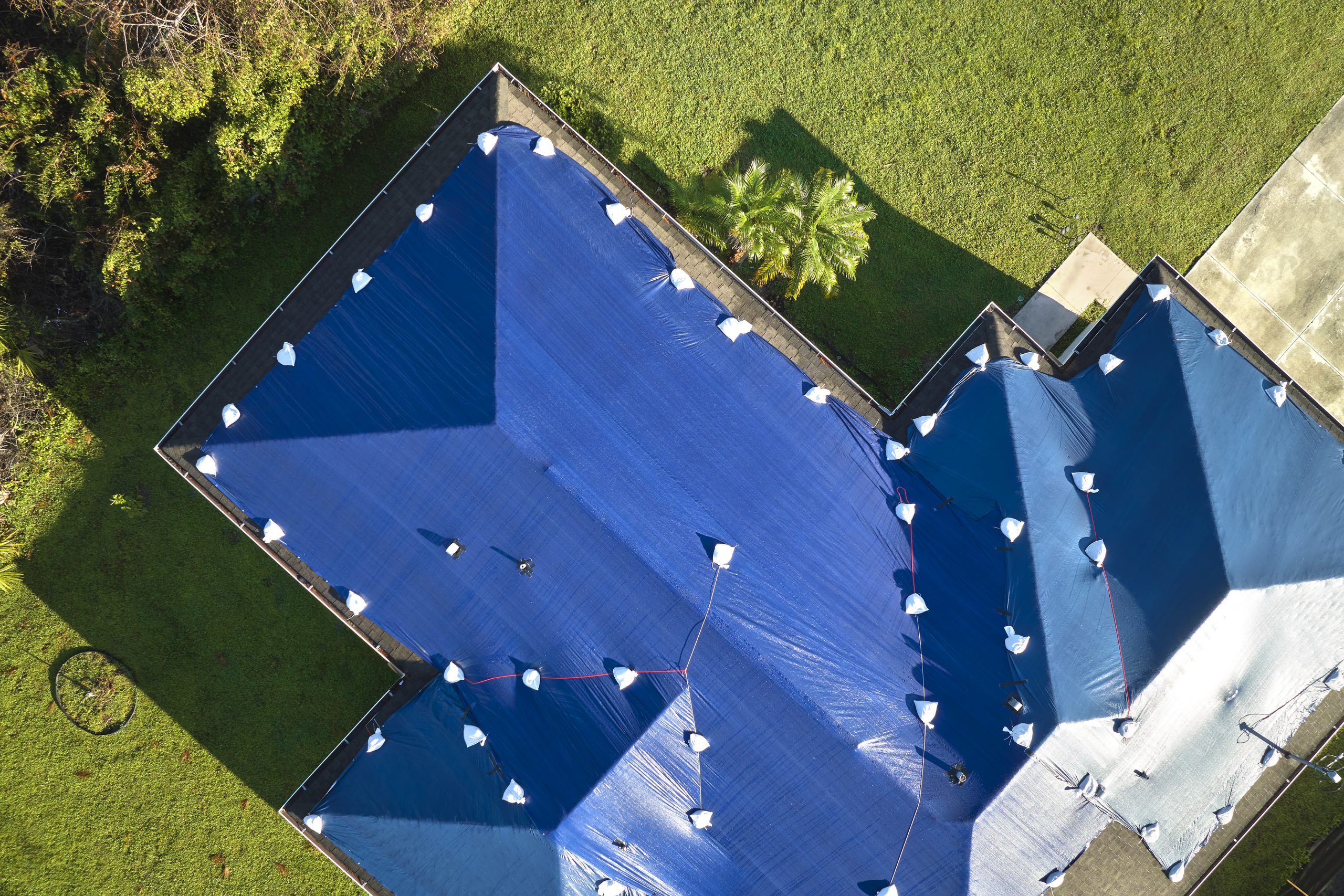
Temporary protection and permanent work should be named separately. Tarping, sealant, or emergency stabilization can reduce immediate exposure, but it should not be presented as the final repair unless the system is actually rebuilt to a durable standard.
- Reinforce or re-weld failed seams where the membrane allows
- Replace damaged flashing, drain components, or localized wet materials
- Correct drainage conditions that would shorten the repair life
- Recommend a larger restoration or replacement scope when failures are widespread
- Clean and prepare the repair area using system-compatible materials
What the written scope should identify
- Confirmed cause and repair boundary
- Materials and components to be removed or reused
- Known exclusions and concealed-condition process
- Temporary protection versus permanent work
- Cleanup, photographs, warranty, and final walkthrough
Records to keep
- Dated inspection photographs
- Itemized estimate and signed contract
- Product and color selections
- Written change orders with supporting photos
- Invoice, warranty, permit, and completion records
Repair, replacement, or monitoring: how to decide
The homeowner should compare the expected life of the repair with the cost and disruption of future mobilization. A low-cost patch may be sensible on a young roof with one defect, but poor value on an aging system with repeated leaks and multiple failing components.
For a broader decision framework, compare Roof Repair New Jersey with Roof Replacement New Jersey and use the actual condition of the property to choose the scope.
Budget factors homeowners should compare
Estimates differ when contractors assume different repair boundaries, materials, access methods, and hidden-condition allowances. Ask each contractor to identify included work, exclusions, unit prices, cleanup, warranty, and the approval process for anything uncovered after removal.
- Access, safety setup, disposal, and weather protection
- Membrane type and availability of compatible materials
- Size and number of damaged areas
- Moisture investigation and removal of wet insulation
- Drain, wall, curb, or parapet work connected to the defect
Shortcuts that often create repeat problems
- Applying an incompatible coating or cement over a dirty surface
- Patching the visible split without correcting ponding water
- Ignoring wet insulation because the top surface looks dry
- Walking on a fragile or wet roof without fall protection
- Assuming every low-slope roof can be repaired with the same material
New Jersey weather and property considerations
Bergen, Passaic, Essex, Hudson, Morris, and Union County homes face wind-driven rain, snow, ice, summer heat, falling branches, and rapid freeze-thaw changes. These conditions make flashing, fastening, drainage, and compatible repair materials especially important.
Terra Nova serves Garfield, Clifton, Lodi, Passaic, Hackensack, Elmwood Park, Wallington, Paramus, Wayne, Montclair, and surrounding communities. Property-specific recommendations are made after reviewing actual conditions, not by repeating generic location text.
How the project should move from diagnosis to completion
- Step 1: Discuss the symptom, history, and urgency
- Step 2: Inspect and document the connected system
- Step 3: Explain repair, replacement, and monitoring options
- Step 4: Provide a written scope with clear assumptions
- Step 5: Complete the work, cleanup, photographs, and walkthrough
Original Terra Nova services and resources
- Roof Repair New Jersey
- Roof Leak Repair New Jersey
- Roof Inspection in North Jersey
- Flat Roof Repair Cost
- How Long a Flat Roof Lasts
- Best Flat Roof Materials
- Roof Replacement New Jersey
Related new resources in these production batches
Related roof-leak and roof-replacement resources
Frequently asked questions
Can this problem be repaired without replacing the whole roof?
Often, when the defect is isolated and surrounding roofing remains flexible, dry, correctly installed, and serviceable. A complete inspection is needed before promising a limited repair.
What should be inspected for flat roof bubbling repair?
The contractor should inspect the visible defect, connected roof components, interior evidence, underlayment or decking where accessible, and the path water or wind could have taken.
Is this roof condition an emergency?
Active water entry, an open roof, falling material, structural movement, or electrical exposure requires prompt attention. Stable cosmetic issues may allow scheduled service.
What affects the cost of the repair?
Roof height, pitch, access, material matching, repair size, flashing, decking, emergency scheduling, and concealed moisture can change the final scope.
How long should a professional repair take?
Many isolated repairs can be completed in one visit, but diagnostic work, specialty materials, weather, structural damage, or coordinated trades can extend the schedule.
Will insurance or a roof warranty cover the repair?
Coverage depends on cause, policy or warranty terms, maintenance, age, installation records, and exclusions. The contractor documents conditions; the insurer or warrantor decides coverage.
Last reviewed by Terra Nova Construction & Roofing: July 15, 2026. This page provides general educational information. Property conditions, policy coverage, warranty terms, municipal requirements, and project scope vary.
Get a professional evaluation
Send the property address, known age, photographs, and a short description of the concern. Terra Nova can inspect the connected roof or drainage components and prepare a written North Jersey scope.