
Roof Damage From Flying Debris
A professional evaluation of roof damage from flying debris should document visible and hidden damage before temporary repairs, cleanup, or additional weather erase important evidence.
Thank you for reading this post, don't forget to subscribe!Homeowners searching for roof damage from flying debris usually want to know whether the issue is limited, what caused it, how urgent it is, and whether a repair can be completed without creating another weak transition. The answer depends on the complete assembly, not only the most visible symptom.
A professional evaluation of roof damage from flying debris should document visible and hidden damage before temporary repairs, cleanup, or additional weather erase important evidence. Any estimate should also state what happens if concealed moisture, rotten wood, incompatible materials, or a larger failure pattern is found after access is opened.
Quick answer
A professional evaluation of roof damage from flying debris should document visible and hidden damage before temporary repairs, cleanup, or additional weather erase important evidence.
The safest next step is a documented inspection and itemized scope—not roof climbing or a blind surface patch.
What homeowners should know about this condition
The phrase roof damage from flying debris can describe several different conditions. Two homes with a similar visible symptom may require different work because the roof type, age, pitch, drainage pattern, surrounding materials, and history of previous repairs are different.
This page supports the broader How to Identify Roof Storm Damage resource and is designed to help homeowners ask better questions before approving work.
Symptoms that justify an inspection
- New leaks, attic moisture, or ceiling stains after the event
- Bent flashing, gutters, vents, or exposed roof openings
- Tree contact, displaced materials, or unusual roof movement
- Missing, lifted, creased, cracked, or punctured roofing materials
- Fresh debris impact marks or damaged accessories
One symptom does not prove one cause. Patterns, timing, weather, and connected components should be considered together.
Likely sources a contractor should evaluate
Most failures develop from a combination of exposure and details rather than one dramatic cause. For roof damage from flying debris, a contractor should review installation, age, movement, moisture, prior repairs, and the way water or wind reaches the area.
- Snow, ice, or freeze-thaw stress on drainage and edge details
- Wind uplift at edges, ridges, and poorly sealed tabs
- Hail or debris impact that fractures or bruises materials
- Falling trees, limbs, or equipment
- Wind-driven rain entering vulnerable transitions
How Terra Nova evaluates the affected system
The inspection should connect every observation to a proposed action. If a contractor recommends replacement, the homeowner should understand why a limited repair is unreliable. If a targeted repair is recommended, the surrounding materials should be capable of supporting it.
- Step 1: Separate pre-existing wear from event-related changes
- Step 2: Identify immediate stabilization needs before permanent scope
- Step 3: Document conditions from the ground and safe accessible areas first
- Step 4: Compare all roof slopes, edges, ridges, vents, flashing, and gutters
- Step 5: Inspect attic and interior evidence without assuming the entry point
Condition, cause, and next-step table
| Observed condition | What it may indicate | Professional next step |
|---|---|---|
| Fresh debris impact marks or damaged accessories | Hail or debris impact that fractures or bruises materials | Replace complete sections when matching or system continuity is not practical |
| New leaks, attic moisture, or ceiling stains after the event | Falling trees, limbs, or equipment | Create photographs, measurements, and a written scope for the homeowner |
| Bent flashing, gutters, vents, or exposed roof openings | Wind-driven rain entering vulnerable transitions | Tarp or protect open areas when it can be done safely |
| Tree contact, displaced materials, or unusual roof movement | Snow, ice, or freeze-thaw stress on drainage and edge details | Remove dangerous debris through qualified professionals |
Repair options and possible next steps
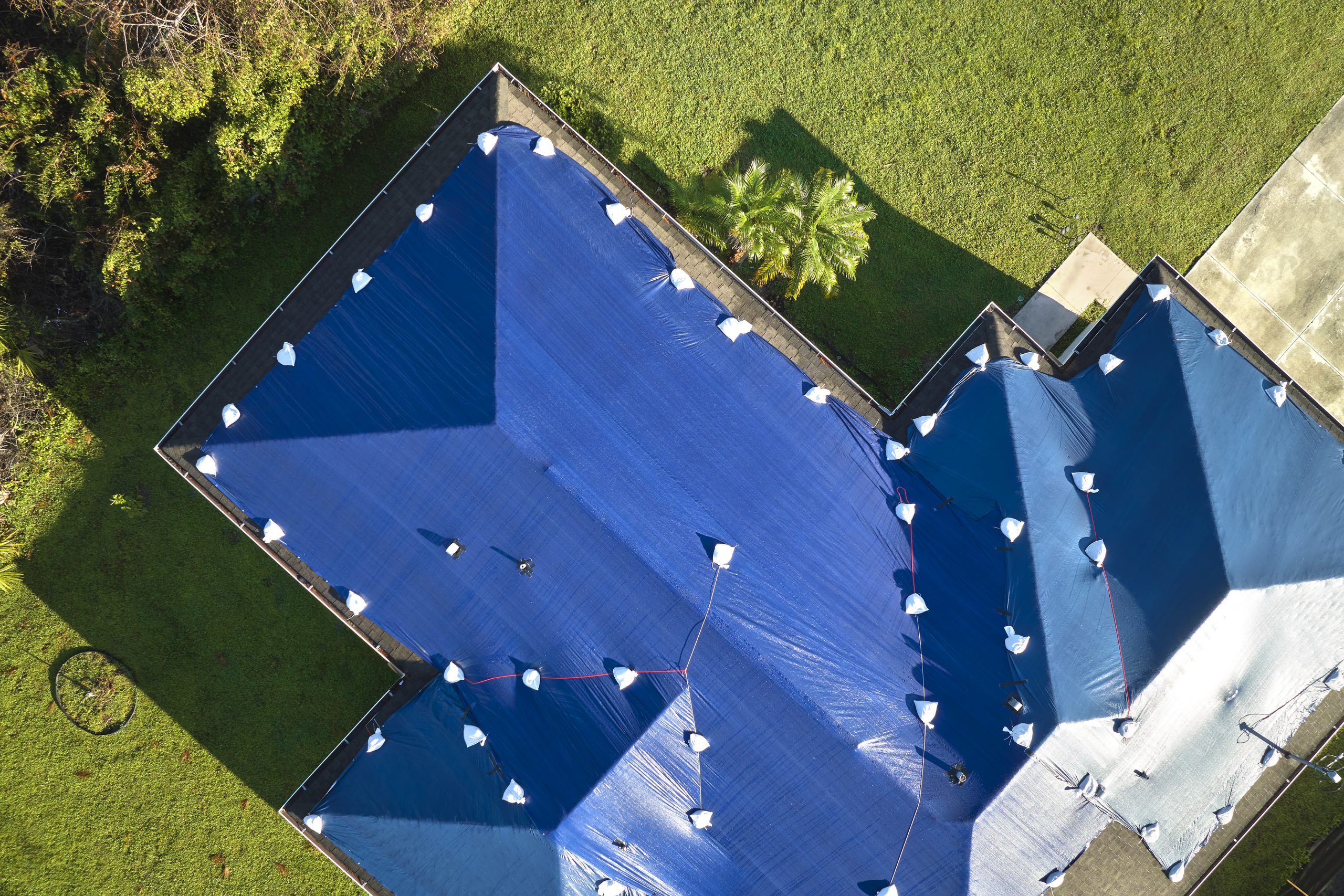
Temporary protection and permanent work should be named separately. Tarping, sealant, or emergency stabilization can reduce immediate exposure, but it should not be presented as the final repair unless the system is actually rebuilt to a durable standard.
- Remove dangerous debris through qualified professionals
- Repair isolated damage when surrounding materials remain serviceable
- Replace complete sections when matching or system continuity is not practical
- Create photographs, measurements, and a written scope for the homeowner
- Tarp or protect open areas when it can be done safely
What the written scope should identify
- Confirmed cause and repair boundary
- Materials and components to be removed or reused
- Known exclusions and concealed-condition process
- Temporary protection versus permanent work
- Cleanup, photographs, warranty, and final walkthrough
Records to keep
- Dated inspection photographs
- Itemized estimate and signed contract
- Product and color selections
- Written change orders with supporting photos
- Invoice, warranty, permit, and completion records
How the long-term decision should be made
Repair is generally favored when damage is isolated, matching materials are available, the surrounding system remains serviceable, and the transition can be rebuilt without creating new weak points. Replacement gains value when failures are widespread, materials are brittle, hidden damage is extensive, or the remaining life is short.
For a broader decision framework, compare Roof Repair New Jersey with Roof Replacement New Jersey and use the actual condition of the property to choose the scope.
Why estimates for this work can differ
Estimates differ when contractors assume different repair boundaries, materials, access methods, and hidden-condition allowances. Ask each contractor to identify included work, exclusions, unit prices, cleanup, warranty, and the approval process for anything uncovered after removal.
- Interior protection and work performed by other trades
- Emergency response and temporary protection
- Height, pitch, debris, and access restrictions
- Number of roof sections and components damaged
- Material matching, code-related work, and concealed deck damage
Shortcuts that often create repeat problems
- Discarding damaged materials before documenting them
- Assuming no missing shingles means no wind damage
- Signing a rushed contract before reviewing scope and contractor credentials
- Waiting through additional weather with an open or active leak
- Climbing onto a wet, icy, unstable, or tree-damaged roof
North Jersey conditions that affect this work
North Jersey properties include steep suburban roofs, flat additions, attached homes, masonry transitions, mature trees, narrow side yards, and older construction that has been modified over several decades. Access and neighboring-property protection can materially affect the work plan.
Municipal permit or inspection requirements can vary with the location and scope. The contract should state who verifies applicable requirements and how concealed conditions or scope changes will be documented.
What to expect from Terra Nova
- Step 1: Discuss the symptom, history, and urgency
- Step 2: Inspect and document the connected system
- Step 3: Explain repair, replacement, and monitoring options
- Step 4: Provide a written scope with clear assumptions
- Step 5: Complete the work, cleanup, photographs, and walkthrough
Original Terra Nova services and resources
- How to Identify Roof Storm Damage
- What Hail Damage Looks Like on a Roof
- Roof Repair New Jersey
- Roof Leak Repair New Jersey
- Roof Inspection in North Jersey
- Roof Replacement New Jersey
- Homeowners Insurance and Roof Replacement
Related new resources in these production batches
Related roof-leak and roof-replacement resources
Frequently asked questions
Is storm-related roof damage always visible from the ground?
No. Some wind, hail, flashing, and underlayment damage is subtle or located on slopes that cannot be evaluated safely from the ground.
How soon should I schedule a storm-damage inspection?
Active leaks, openings, fallen objects, loose materials, or structural movement require prompt attention. Less urgent concerns should still be documented before additional weather changes the evidence.
Can I tarp the roof myself?
Roof access after a storm can be extremely dangerous. Use interior protection where safe and arrange qualified temporary roof protection rather than climbing onto a wet or damaged roof.
Will homeowners insurance pay for the damage?
Coverage depends on the cause, policy terms, exclusions, roof condition, and insurer investigation. A roofer can document conditions but cannot guarantee coverage.
When does storm repair become roof replacement?
Replacement may be considered when damage is widespread, materials cannot be matched or repaired reliably, decking is affected, or the remaining roof has limited service life.
What photographs should I keep?
Keep wide property views, close-ups from safe locations, interior stains, temporary protection, damaged contents, invoices, and dated photographs of completed work.
Last reviewed by Terra Nova Construction & Roofing: July 15, 2026. This page provides general educational information. Property conditions, policy coverage, warranty terms, municipal requirements, and project scope vary.
Get a professional evaluation
Send the property address, known age, photographs, and a short description of the concern. Terra Nova can inspect the connected roof or drainage components and prepare a written North Jersey scope.