
Roof Leak from an Ice Dam in New Jersey
Roof Leak from an Ice Dam in New Jersey requires more than covering the visible stain. Terra Nova Construction & Roofing evaluates the roof surface, flashing, penetrations, drainage, and attic evidence to identify why water is entering and what repair will provide dependable protection.
Homeowners searching for ice dam roof leak New Jersey are usually dealing with meltwater backing beneath roofing near cold eaves. The most common causes include uneven roof temperature, attic air leakage, insufficient insulation, poor ventilation, clogged gutters, and repeated freeze-thaw cycles. Because water can travel along decking, rafters, underlayment, insulation, and wall cavities, the wet spot indoors may not be directly below the exterior opening.
Terra Nova Construction & Roofing is a licensed and insured New Jersey contractor based in Garfield and serving Bergen, Passaic, Essex, Hudson, Morris, and Union counties. We focus on practical diagnostics, written scopes, correct flashing details, and repairs designed around the actual roofing system.
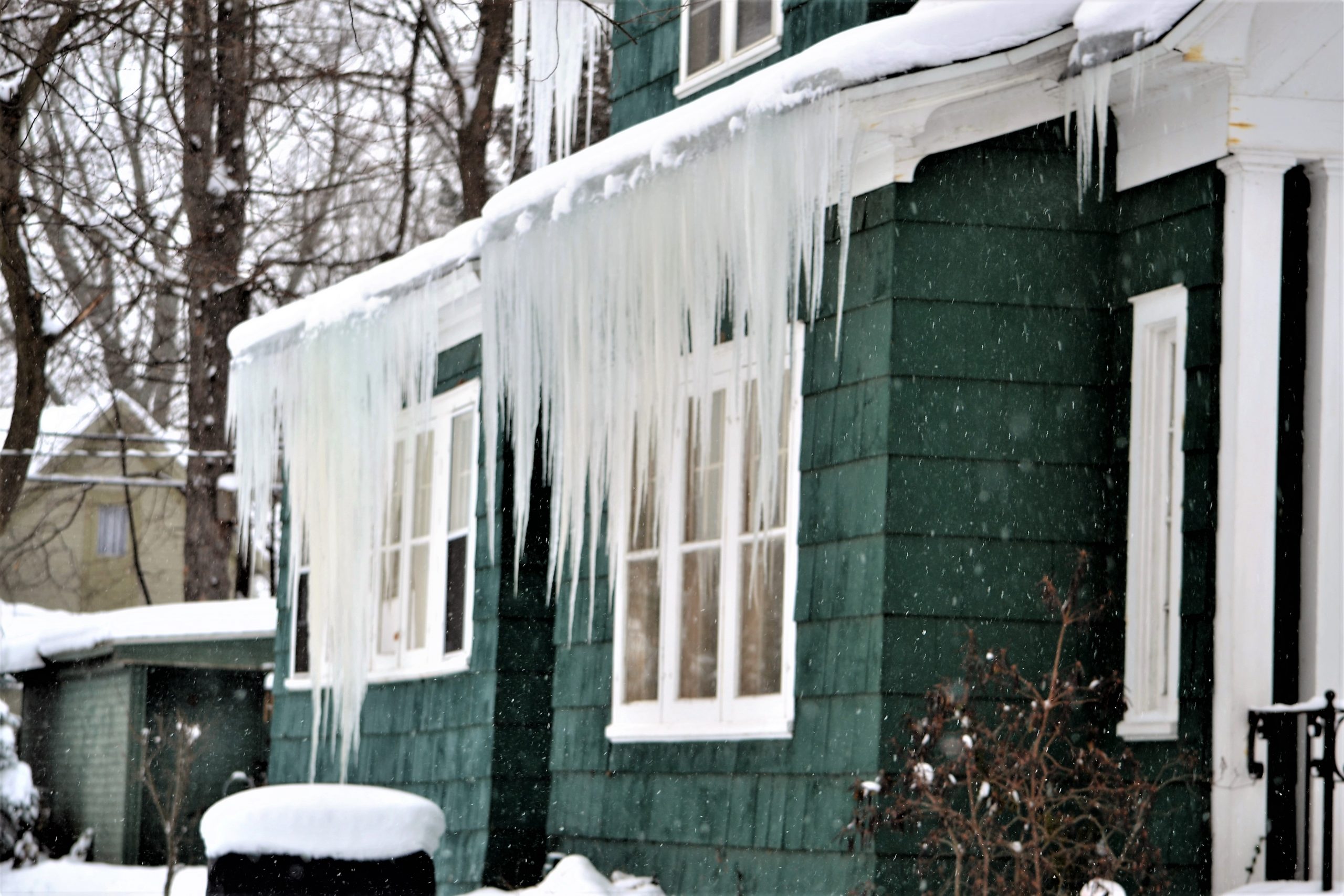

Quick answer
Meltwater backing beneath roofing near cold eaves should be inspected before interior stains are painted or patched. A durable solution starts by identifying the entry point, checking the surrounding assembly, and deciding whether a targeted repair or a broader roofing correction makes better financial sense.
Common warning signs
- Thick ice forms at eaves or in gutters
- Water stains appear near outside walls
- Icicles repeatedly grow along the same edge
- Snow melts faster on upper roof sections
- Attic frost or damp insulation is present
Some symptoms are obvious, while others only appear during wind-driven rain, snowmelt, or long storms. Photographs showing when and where the stain changes can help the diagnostic process. Related resources such as Professional Roof Leak Inspection in New Jersey, Roof Flashing Leak Repair in New Jersey, Roof Leak Repair Cost in New Jersey explain other common leak patterns and repair decisions.
What causes this type of roof leak?
The likely causes include uneven roof temperature, attic air leakage, insufficient insulation, poor ventilation, clogged gutters, and repeated freeze-thaw cycles. Roofing systems work by overlapping materials so water continually sheds downhill. When one layer is installed backward, punctured, aged, lifted, or separated from the next layer, water can enter even when the surrounding shingles appear acceptable from the ground.
Surface sealant may temporarily slow water, but it should not replace properly integrated shingles, underlayment, step flashing, counterflashing, boots, membrane seams, or drainage components. Repeated caulking often hides the defect and makes the eventual repair more difficult.
How Terra Nova diagnoses and repairs the problem
- Step 1: Address active interior water and safety first
- Step 2: Inspect eaves, attic insulation, air leakage, and ventilation
- Step 3: Evaluate ice-and-water membrane coverage
- Step 4: Repair damaged roofing and decking
- Step 5: Recommend long-term heat-loss and airflow corrections
Our goal is to match the repair to the roof’s age and condition. We explain when a localized repair is reasonable, when surrounding materials may be too brittle to disturb, and when recurring leaks suggest that replacement could offer better value.
What we inspect
- Shingles or membrane condition
- Roof penetrations and flashing
- Valleys, walls, dormers, and roof edges
- Gutters, drains, and runoff paths
- Attic decking, rafters, insulation, and ventilation
What homeowners should document
- Date and time the leak appeared
- Rain, wind, snow, or freeze conditions
- Photos of interior stains and exterior damage
- Prior repairs and roof age
- Any insurance claim or warranty information
Roof leak repair cost in New Jersey
The immediate roof repair may be only part of the solution. Long-term correction can involve roofing, insulation, air sealing, and ventilation work.
A low quote is not necessarily a good value if it only smears roof cement over the visible area. Compare written scopes, the materials being removed and replaced, decking allowances, temporary work, cleanup, and warranty terms. For broader budgeting, review our New Jersey roof leak repair cost guide.
Repair versus replacement
A repair is generally attractive when the failure is isolated and the surrounding roof has useful service life. Replacement may deserve consideration when the roof is old, brittle, repeatedly patched, leaking in multiple places, or hiding widespread decking deterioration. Our roof leak repair versus replacement guide explains the decision factors in more detail.
North Jersey weather considerations
North Jersey roofs experience heavy rain, high winds, snow, ice, summer heat, and frequent freeze-thaw cycles. Those conditions stress seal strips, flashing joints, masonry transitions, pipe boots, valley details, and low-slope drainage. Homes in Garfield, Clifton, Lodi, Hackensack, Passaic, Elmwood Park, Wallington, Montclair, Wayne, Paramus, and nearby communities also vary widely in roof age and construction.
Local relevance should never mean stuffing a city name into every paragraph. It means understanding how older housing stock, closely spaced homes, multi-level additions, masonry chimneys, low-slope rear roofs, and seasonal weather affect the repair method.
How to reduce future roof leaks
- Inspect the roof after major wind or impact events.
- Keep gutters, valleys, and drains clear.
- Replace cracked boots and damaged flashing before interior damage appears.
- Maintain balanced attic intake and exhaust ventilation.
- Avoid unqualified surface patches that block drainage.
- Document roof work and preserve manufacturer and workmanship warranties.
Common homeowner mistakes to avoid
- Painting or patching the ceiling before the water source is documented
- Using exposed caulk or roof cement as the only long-term repair
- Assuming the leak is directly above the visible stain
- Waiting through repeated storms while hidden insulation or decking remains wet
- Comparing repair prices without comparing the materials and flashing scope
A dependable repair restores the water-shedding layers and corrects the entry path. Cosmetic interior work should begin only after the roof is repaired and affected materials have been evaluated.
Related Terra Nova roofing services
- Roofing Contractor New Jersey
- Roof Repair New Jersey
- Roof Replacement New Jersey
- Roof Leak Repair New Jersey
- Roofing Bergen County NJ
Related roof leak resources
Related roof replacement resources
Frequently asked questions
Can heat cables solve ice dams?
Often, yes, but the correct answer depends on the roof material, age, access, hidden damage, and whether the proposed method restores a proper water-shedding assembly.
Do gutter guards prevent ice dams?
A qualified inspection evaluates meltwater backing beneath roofing near cold eaves, checks likely causes such as uneven roof temperature, attic air leakage, insufficient insulation, poor ventilation, clogged gutters, and repeated freeze-thaw cycles, and recommends a repair that addresses the actual water entry point.
Is an ice dam always caused by poor ventilation?
A qualified inspection evaluates meltwater backing beneath roofing near cold eaves, checks likely causes such as uneven roof temperature, attic air leakage, insufficient insulation, poor ventilation, clogged gutters, and repeated freeze-thaw cycles, and recommends a repair that addresses the actual water entry point.
Can I chip ice off the roof myself?
Often, yes, but the correct answer depends on the roof material, age, access, hidden damage, and whether the proposed method restores a proper water-shedding assembly.
Will a new roof stop ice dams?
A qualified inspection evaluates meltwater backing beneath roofing near cold eaves, checks likely causes such as uneven roof temperature, attic air leakage, insufficient insulation, poor ventilation, clogged gutters, and repeated freeze-thaw cycles, and recommends a repair that addresses the actual water entry point.
Last reviewed by Terra Nova Construction & Roofing: July 15, 2026. Property conditions, insurance coverage, warranties, and local requirements vary.
Get a professional roof leak evaluation
Send your address, a short description of the problem, and photos if available. Terra Nova will review the symptoms, inspect the relevant roofing components, and explain the practical next step.