
Tree Damage Roof Repair
The right solution for tree damage roof repair corrects the source of the damage and then rebuilds the affected water-shedding layers rather than covering the area with another surface patch.
Thank you for reading this post, don't forget to subscribe!When evaluating tree damage roof repair, the lowest price is not automatically the lowest long-term cost. A repair that restores the actual water path, fastening, drainage, and supporting materials is more valuable than a surface treatment that hides the evidence.
The right solution for tree damage roof repair corrects the source of the damage and then rebuilds the affected water-shedding layers rather than covering the area with another surface patch. Terra Nova Construction & Roofing uses photographs, measurements, condition notes, and a written scope to explain the recommendation for North Jersey properties.
Quick answer
The right solution for tree damage roof repair corrects the source of the damage and then rebuilds the affected water-shedding layers rather than covering the area with another surface patch.
The safest next step is a documented inspection and itemized scope—not roof climbing or a blind surface patch.
What this condition usually means
The visible condition is evidence, not always the source. Water can move along decking, fasteners, framing, membranes, or trim before it appears inside. Wind can loosen a material without removing it. Drainage can fail at an outlet even when the gutter or roof surface looks clean.
This page supports the broader Roof Repair New Jersey resource and is designed to help homeowners ask better questions before approving work.
Warning signs to look for
- Debris or disturbed roofing materials around the source
- Interior staining that began after installation, removal, or a weather event
- A temporary patch that is lifting or separating
- New leakage or damage near equipment, branches, animals, or an impact point
- Open fastener holes, torn shingles, bent metal, or punctured membrane
One symptom does not prove one cause. Patterns, timing, weather, and connected components should be considered together.
Likely sources a contractor should evaluate
Most failures develop from a combination of exposure and details rather than one dramatic cause. For tree damage roof repair, a contractor should review installation, age, movement, moisture, prior repairs, and the way water or wind reaches the area.
- Mounting hardware installed without a complete flashing system
- Animals opening edges, vents, or deteriorated materials
- Tree movement and repeated rubbing rather than one dramatic impact
- Removal of equipment without closing penetrations to roofing standards
- Impact or abrasion that breaks the roof surface
The diagnostic process behind a durable repair
The inspection should connect every observation to a proposed action. If a contractor recommends replacement, the homeowner should understand why a limited repair is unreliable. If a targeted repair is recommended, the surrounding materials should be capable of supporting it.
- Step 1: Define temporary protection and permanent restoration separately
- Step 2: Document the source and all visible attachment or impact points
- Step 3: Inspect beyond the obvious opening for underlayment and deck damage
- Step 4: Check nearby flashing, drainage, wiring, or equipment supports
- Step 5: Coordinate with the responsible specialty trade when equipment must be moved
Condition, cause, and next-step table
| Observed condition | What it may indicate | Professional next step |
|---|---|---|
| Open fastener holes, torn shingles, bent metal, or punctured membrane | Tree movement and repeated rubbing rather than one dramatic impact | Remove damaged or abandoned components using appropriate trade coordination |
| Debris or disturbed roofing materials around the source | Removal of equipment without closing penetrations to roofing standards | Replace affected roofing, flashing, underlayment, and decking |
| Interior staining that began after installation, removal, or a weather event | Impact or abrasion that breaks the roof surface | Reflash remaining mounts with a compatible system |
| A temporary patch that is lifting or separating | Mounting hardware installed without a complete flashing system | Photograph the repair boundary and final water-shedding details |
What a complete scope may include
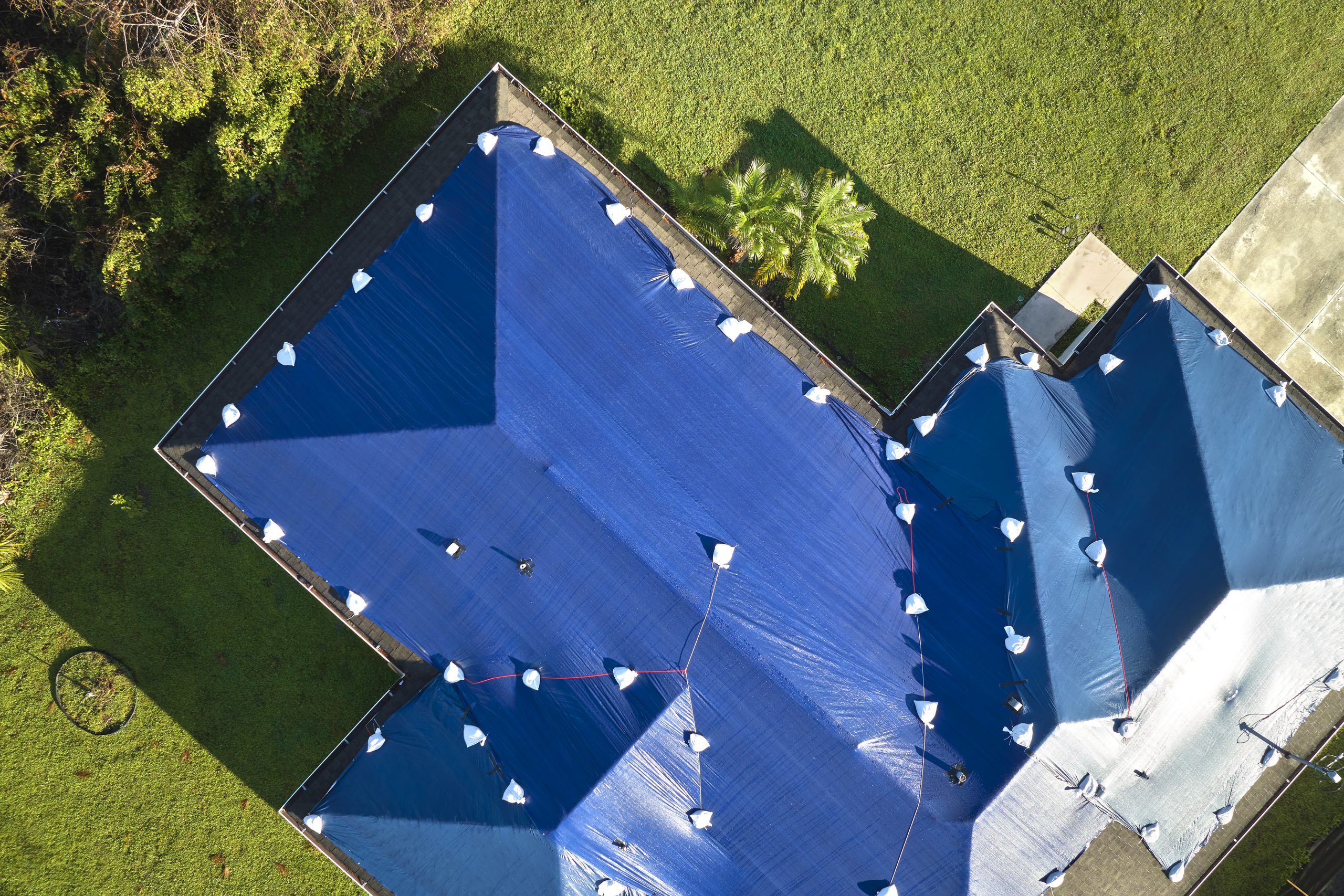
Temporary protection and permanent work should be named separately. Tarping, sealant, or emergency stabilization can reduce immediate exposure, but it should not be presented as the final repair unless the system is actually rebuilt to a durable standard.
- Reflash remaining mounts with a compatible system
- Photograph the repair boundary and final water-shedding details
- Stabilize open areas before additional weather when needed
- Remove damaged or abandoned components using appropriate trade coordination
- Replace affected roofing, flashing, underlayment, and decking
What the written scope should identify
- Confirmed cause and repair boundary
- Materials and components to be removed or reused
- Known exclusions and concealed-condition process
- Temporary protection versus permanent work
- Cleanup, photographs, warranty, and final walkthrough
Records to keep
- Dated inspection photographs
- Itemized estimate and signed contract
- Product and color selections
- Written change orders with supporting photos
- Invoice, warranty, permit, and completion records
How to choose the right level of work
The homeowner should compare the expected life of the repair with the cost and disruption of future mobilization. A low-cost patch may be sensible on a young roof with one defect, but poor value on an aging system with repeated leaks and multiple failing components.
For a broader decision framework, compare Roof Repair New Jersey with Roof Replacement New Jersey and use the actual condition of the property to choose the scope.
Why estimates for this work can differ
A meaningful price cannot be reduced to one universal number. Height, pitch, system type, matching, safety setup, weather protection, and connected damage all matter. Comparing itemized scope protects the homeowner better than comparing totals alone.
- Material matching and replacement of concealed layers
- Emergency access, debris removal, and temporary protection
- Interior or electrical work outside the roofing scope
- Equipment removal or coordination with another contractor
- Size of the damaged area and number of penetrations
Shortcuts that often create repeat problems
- Assuming one visible puncture is the only damaged location
- Sealing around hardware without correcting its flashing
- Allowing equipment removal to leave exposed screw holes
- Cutting branches over the roof without a controlled plan
- Closing animal openings while animals may still be inside
Why local roof and drainage conditions matter
Local roofing and drainage problems are often connected. A roof-edge leak can damage fascia, a blocked downspout can create overflow, and poor attic conditions can mimic an exterior leak. The inspection should consider those connections rather than treating each symptom in isolation.
Terra Nova serves Garfield, Clifton, Lodi, Passaic, Hackensack, Elmwood Park, Wallington, Paramus, Wayne, Montclair, and surrounding communities. Property-specific recommendations are made after reviewing actual conditions, not by repeating generic location text.
A clear sequence for professional service
- Step 1: Discuss the symptom, history, and urgency
- Step 2: Inspect and document the connected system
- Step 3: Explain repair, replacement, and monitoring options
- Step 4: Provide a written scope with clear assumptions
- Step 5: Complete the work, cleanup, photographs, and walkthrough
Original Terra Nova services and resources
- Roof Repair New Jersey
- Roof Leak Repair New Jersey
- Roof Inspection in North Jersey
- Roof Replacement New Jersey
- How to Identify Roof Storm Damage
- Roof Maintenance in North Jersey
Related new resources in these production batches
Related roof-leak and roof-replacement resources
Frequently asked questions
Can this problem be repaired without replacing the whole roof?
Often, when the defect is isolated and surrounding roofing remains flexible, dry, correctly installed, and serviceable. A complete inspection is needed before promising a limited repair.
What should be inspected for tree damage roof repair?
The contractor should inspect the visible defect, connected roof components, interior evidence, underlayment or decking where accessible, and the path water or wind could have taken.
Is this roof condition an emergency?
Active water entry, an open roof, falling material, structural movement, or electrical exposure requires prompt attention. Stable cosmetic issues may allow scheduled service.
What affects the cost of the repair?
Roof height, pitch, access, material matching, repair size, flashing, decking, emergency scheduling, and concealed moisture can change the final scope.
How long should a professional repair take?
Many isolated repairs can be completed in one visit, but diagnostic work, specialty materials, weather, structural damage, or coordinated trades can extend the schedule.
Will insurance or a roof warranty cover the repair?
Coverage depends on cause, policy or warranty terms, maintenance, age, installation records, and exclusions. The contractor documents conditions; the insurer or warrantor decides coverage.
Last reviewed by Terra Nova Construction & Roofing: July 15, 2026. This page provides general educational information. Property conditions, policy coverage, warranty terms, municipal requirements, and project scope vary.
Get a professional evaluation
Send the property address, known age, photographs, and a short description of the concern. Terra Nova can inspect the connected roof or drainage components and prepare a written North Jersey scope.