
Full Roof Tear-Off vs. Partial Replacement
A partial replacement can make sense when damage is isolated to a clearly separable roof section and the remaining system has substantial life. A full tear-off is usually stronger when age, wear, leaks, color matching, warranties, or interconnected flashing affect the entire roof.
The search for full roof tear off vs partial replacement often begins after an inspection, leak, storm, sale, or budget concern. The best next step is a scope that separates confirmed conditions, likely unknowns, required work, and optional upgrades.
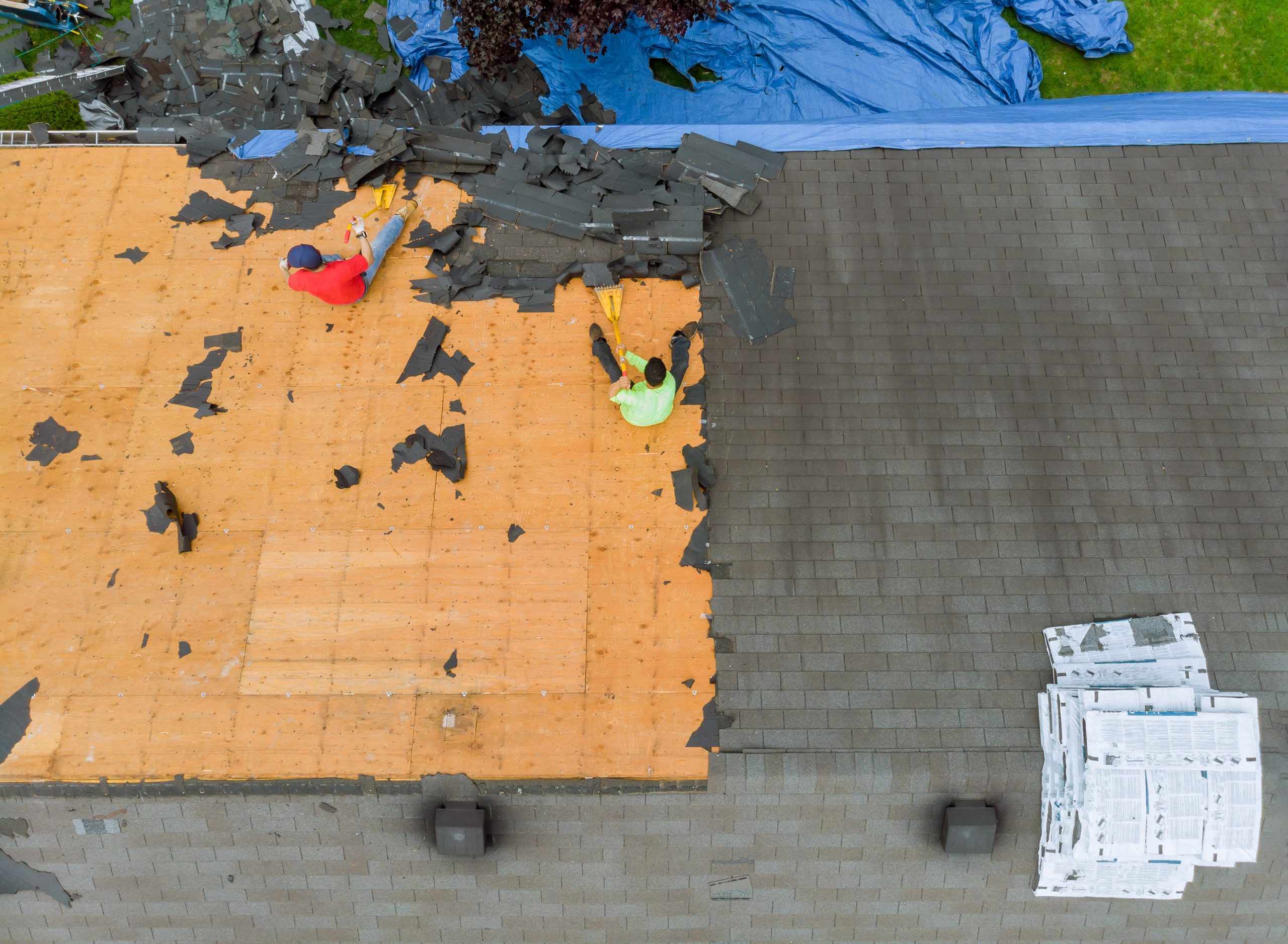
Roof sections do not always function independently. Valleys, ridges, walls, gutters, ventilation, and underlayment connect them. Replacing one area may disturb adjacent materials or leave an old transition at the boundary. The decision should consider the roof as a water-shedding system, not only the visibly damaged plane.

Quick answer
A partial replacement can make sense when damage is isolated to a clearly separable roof section and the remaining system has substantial life. A full tear-off is usually stronger when age, wear, leaks, color matching, warranties, or interconnected flashing affect the entire roof.
What homeowners should understand
A boundary between old and new roofing must function physically and financially. If it creates a weak seam or requires another major mobilization soon, the lower initial scope may not be the better value.
The correct scope is the smallest durable solution, not automatically the smallest area or the largest sale. Roof age, tie-ins, hidden damage, and future access determine whether partial work creates real value.
Key factors that change the recommendation
- Age and condition of remaining roof areas
- Natural separation by walls, ridges, or additions
- Material availability and color match
- Shared valleys, flashing, and ventilation
- Cost of mobilizing twice and warranty implications
These factors should appear in the inspection notes, estimate, contract, or project photographs when they affect the scope. A clear record makes it easier to compare options and prevents important details from disappearing after tear-off begins.
Decision table: Full Roof Tear-Off vs. Partial Replacement
| Condition to evaluate | Risk if ignored | Practical next step |
|---|---|---|
| Age and condition of remaining roof areas | Replacing only the leak stain area without finding the source | Map damaged and undamaged sections |
| Natural separation by walls, ridges, or additions | Creating a seam in the middle of an interconnected roof plane | Inspect attic and transitions between roof areas |
| Material availability and color match | Assuming new and faded shingles will match | Estimate partial and full scopes separately |
| Shared valleys, flashing, and ventilation | Ignoring future cost to mobilize for the remaining roof | Compare remaining life and future access costs |
| Cost of mobilizing twice and warranty implications | Replacing only the leak stain area without finding the source | Document boundaries, materials, and warranty coverage |
How to compare repair, partial work, and replacement
- Step 1: Map damaged and undamaged sections
- Step 2: Inspect attic and transitions between roof areas
- Step 3: Estimate partial and full scopes separately
- Step 4: Compare remaining life and future access costs
- Step 5: Document boundaries, materials, and warranty coverage
The lower initial price of partial work is not always the lower life-cycle cost. Conversely, isolated damage does not automatically justify replacing every roof plane.
What Terra Nova checks
- Age and condition of remaining roof areas
- Natural separation by walls, ridges, or additions
- Material availability and color match
- Decking, underlayment, flashing, ventilation, and drainage connections
- Access, weather protection, cleanup, and documentation requirements
Records homeowners should keep
- Inspection photographs and measurements
- Itemized estimate and signed contract
- Material selections and product documents
- Approved change orders and hidden-condition photographs
- Final invoice, warranties, permits, and completion records
Cost, contract, and scope considerations
Compare the immediate scope with remaining roof life, future mobilization, matching, warranty, and transition risk. The lowest initial price is not always the lowest ownership cost.
For broader pricing context, review How Much Does a New Roof Cost in New Jersey?, then use a site-specific inspection to determine the actual roof area, pitch, layers, access, material system, flashing, ventilation, decking allowances, and disposal requirements for your property.
Common mistakes homeowners should avoid
- Replacing only the leak stain area without finding the source
- Creating a seam in the middle of an interconnected roof plane
- Assuming new and faded shingles will match
- Ignoring future cost to mobilize for the remaining roof
North Jersey roofing considerations
New Jersey weather tests roof edges, valleys, flashing, penetrations, and attic moisture control. Local relevance means designing for those conditions and the actual house—not repeating city names without changing the roofing analysis.
Terra Nova Construction & Roofing serves Garfield, Clifton, Lodi, Passaic, Hackensack, Elmwood Park, Wallington, Paramus, Wayne, Montclair, and surrounding North Jersey communities. A site inspection is used to convert general guidance into a property-specific recommendation.
Related Terra Nova roofing services and original resources
- Roof Replacement New Jersey
- Roofing Contractor New Jersey
- Roof Repair New Jersey
- Signs You Need a New Roof
- How to Compare Roofing Quotes
- What Does a Roof Replacement Include?
- Roof Inspection in North Jersey
Related roof replacement resources
Related roof leak resources
Frequently asked questions
Can only one roof section be replaced?
Yes, when it has a logical separation and the tie-in can be built correctly. The remaining roof condition must still be evaluated.
Will new shingles match old shingles?
Exact matches are difficult because old shingles fade and product lines change.
Does partial replacement have a warranty?
Warranty coverage depends on materials, contractor terms, and how the new work connects to existing roofing.
Is partial replacement good for storm damage?
It can be when damage is limited and repairable, but coverage and technical feasibility are separate questions.
Can a partial roof pass inspection?
It must meet applicable requirements and use a proper tie-in. Permit and inspection rules vary by scope and municipality.
How do I compare full and partial cost?
Compare current price, remaining life, future mobilization, matching, hidden damage access, and warranty—not just square footage.
Last reviewed by Terra Nova Construction & Roofing: July 15, 2026. This page provides general educational information; property conditions, contracts, financing, insurance coverage, warranty terms, and municipal requirements vary.
Get a roof replacement evaluation
Send your address, the roof concern, known age, and photographs if available. Terra Nova can inspect the relevant roof sections, explain the options, and prepare a written scope for your North Jersey property.