
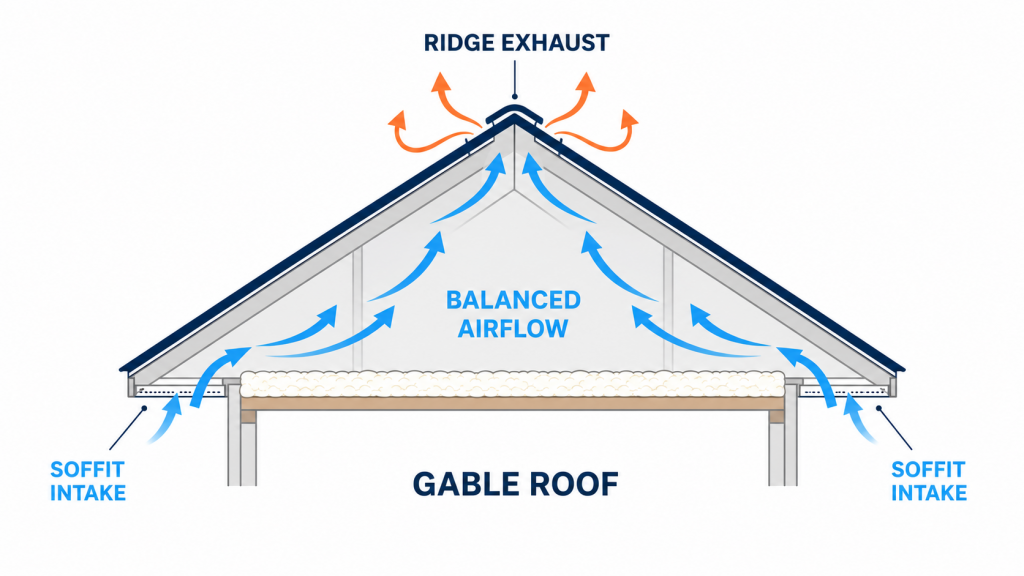
Ridge & soffit vents
- Continuous ridge vent
- Soffit or edge intake vents
- Baffles at the eaves
The standard balanced system for most sloped roofs — no moving parts.
 Terra Nova Roofing & Construction
Frost on the roof nails in January, a musty smell in summer, upstairs rooms that never cool down, or ice dams every winter? Those are attic airflow problems. Terra Nova Roofing & Construction inspects and fixes attic ventilation across North Jersey — intake, exhaust, fans and ducts.
Licensed & insured • NJ Lic. #13VH13824700 • Locally owned in Garfield, NJ • Free inspections • Hablamos español
Text a photo of your attic or the eaves to 973-200-1617 — we usually reply the same business day.
Terra Nova Roofing & Construction provides attic ventilation services in NJ: we inspect the attic, then balance intake and exhaust with soffit and ridge vents, install solar attic fans where they help, and reroute bath fan and dryer ducts that dump moisture into the attic. We serve Passaic, Bergen, Morris, Essex, Hudson and Union County, with a free on-site inspection and a written estimate with photos. Licensed & insured, NJ Lic. #13VH13824700. Call or text 973-200-1617.
An attic should stay close to outside temperature and dry year-round. These are the signs it doesn't:
Second-floor bedrooms that stay hot on summer evenings, even with the AC running. See why is my attic so hot.
Frost on nail tips or the underside of the roof deck in winter, dripping when it warms up — attic condensation in winter.
Snow melts on a warm roof and refreezes at the cold edge, backing water under the shingles.
Curling or blistering shingles and a wavy deck, especially on the sunny side.
Insulation that's damp, matted or stained loses much of what it's for.
The full list: signs of poor attic ventilation.
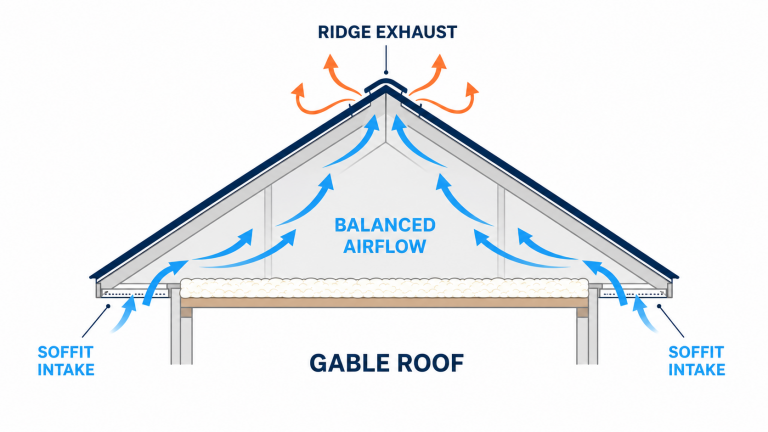
Good attic ventilation is a loop. Cool outside air comes in low, at the soffit vents under the eaves. It moves up along the underside of the roof deck, picks up heat and moisture, and leaves high, at a ridge vent or other exhaust. Warm air rises, so the system mostly runs itself.
More on this: intake vs. exhaust ventilation and the best roof ventilation for your home.
We pick the system that fits your roof and attic — not one product for every house.
The standard balanced system for most sloped roofs — no moving parts.
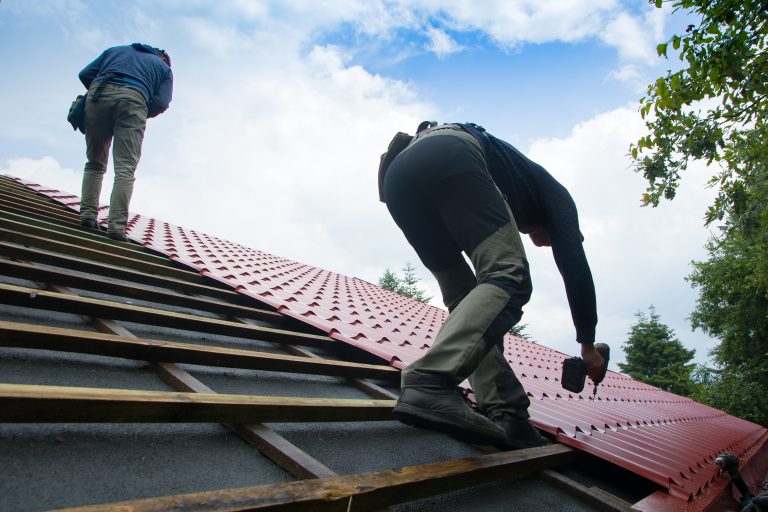
Useful on hip roofs, short ridges and hot attics. We'll tell you when one helps and when vents alone are better.
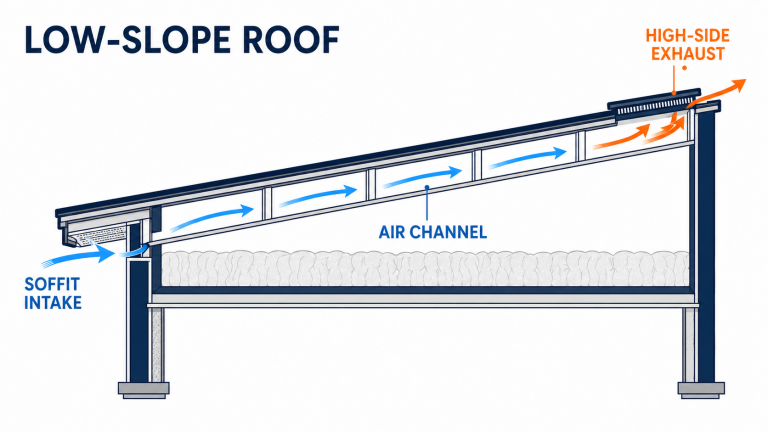
Roofs without a full attic need their own approach to moving moisture out.
One of the most common moisture problems we find has nothing to do with roof vents: a bathroom exhaust fan or dryer duct that ends in the attic instead of outside. Every shower sends warm, wet air straight onto the cold roof deck, where it condenses, soaks insulation and grows mold.
Fixing the duct is often the single biggest improvement in a damp attic — and it's usually a small job.
Moisture and heat are the two things ventilation controls. When they build up, you see it in two seasons:
Winter: warm, damp air from the house leaks into the attic and hits the cold roof deck. It frosts, then melts and drips onto insulation and ceilings — often mistaken for a roof leak. A warm attic also melts snow on the roof, and the water refreezes at the eaves into ice dams. Read ice dams from poor ventilation.
Summer: a hot attic bakes the shingles from below and pushes heat into upstairs rooms.
The fix is usually a combination: seal obvious air leaks from the house, get the bath and dryer ducts outside, clear and add intake, and balance it with ridge exhaust or a solar fan. We also replace wet or damaged insulation where needed — attic insulation top-up. Learn more on attic moisture problems in New Jersey.
Is it a leak or condensation? Water in the attic after a cold snap, with no rain, is often condensation. Read roof leak or attic condensation before paying for a roof repair you may not need.
Are there intake vents, and are they open or blocked by paint, insulation or old boards?
Ridge vent, box vents, gable vents or fans — what's there and whether the types conflict.
Frost marks, staining, mold, delamination and soft spots from the attic side.
Depth, dampness and whether it's packed into the eaves.
Bath fans, dryer vents and kitchen exhausts — where they really end up.
What we found, what we recommend and the exact price before any work.
Details: attic ventilation inspection.
We price ventilation after the free inspection, because every attic is different. These are the main factors:
| Factor | Usually simpler | Usually more involved |
|---|---|---|
| Roof shape | Long gable ridge | Hip roof with short ridges |
| Intake | Soffit already vented | Solid soffit, or no soffit at all |
| Exhaust | Ridge vent added or replaced | Old vents removed and patched, solar fans added |
| Ducts | Already outside | Bath and dryer ducts to reroute |
| Damage | Dry attic | Wet insulation, moldy or soft sheathing |
| Timing | Done with a roof replacement | Separate project on an existing roof |
See attic ventilation cost factors, are solar attic fans worth it and how many solar attic fans you need.
A new roof is the easiest time to fix ventilation. With the shingles off, we can cut a proper ridge vent slot, remove old box vents and patch the deck, add intake at the eaves and flash any solar fans in cleanly. Every Terra Nova roof replacement includes ventilation as part of the job, and the shingles are installed to the manufacturer's specs — which include ventilation requirements.
Read attic ventilation during roof replacement, or see our county pages for Bergen, Passaic, Essex, Morris and Hudson solar attic fans.
★★★★★ 5-star rated on Google
Tell us what you're noticing — heat, frost, smell, ice dams — and send photos of the attic if you can. We'll set up a free inspection and a written estimate with photos.
Fill this out and a member of our team will follow up within one business day.
✓ No-obligation quote · ✓ Licensed & insured · ✓ Your info is never shared
Common signs are hot upstairs rooms, frost or dripping in the attic in winter, a musty smell, dark stains on the sheathing, ice dams and shingles aging early.
Air comes in through vents under the eaves, moves up under the roof deck and leaves through a vent at the ridge, carrying heat and moisture out.
They can help on roofs with limited ridge or intake, and on hot attics. They aren't the answer for every house, and we'll tell you when vents alone are better.
Mixing exhaust types can short-circuit airflow. We usually close off one so the system works as a loop from soffit to ridge.
Yes. It puts moist air right onto the roof deck. We run the duct to a proper roof or wall cap.
No. In winter it's often condensation from house air. We check both before recommending any roof repair.
It's a big part of it. A warm attic melts snow on the roof, and the water refreezes at the cold eaves.
It depends on roof shape, existing intake and exhaust, ducts to reroute and any damage. We give an exact written price after a free inspection.
Yes — it's the easiest time. Ventilation is included in every Terra Nova roof replacement.
Passaic, Bergen, Morris, Essex, Hudson and Union County. We're licensed and insured, NJ Lic. #13VH13824700, and locally owned in Garfield.
Sí, hablamos español. Llame o mande texto al 973-200-1617.
Updated November 2026 by the Terra Nova Roofing & Construction team, Garfield, NJ • NJ Lic. #13VH13824700
Choose an option to reach a team member.


